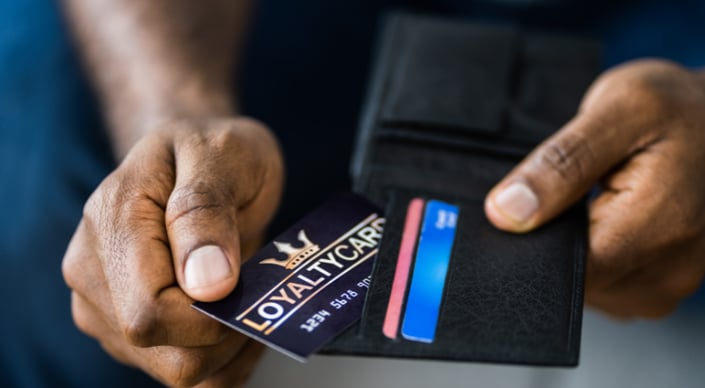
Subscription loyalty program plans can absolutely help with churn, but only when you build them for the way subscriptions actually behave - month after month, not checkout by checkout. Your customer wakes up and asks a simple question: “Am I still getting enough value for this to keep it?” Your loyalty approach needs to answer that question quickly, without hoops.
Below is how we'd pressure-test it: what makes subscription loyalty work, what usually breaks, and a few reward structures you can launch without creating a points spreadsheet that haunts your team.
Why a Subscription Loyalty Program Helps Churn (And When it Backfires)
In subscription economics, small retention gains matter more than most teams expect.
But the backfire risk is real. If you bolt on a “loyalty program” that feels like a separate club with confusing rules, you don’t create commitment. You create friction. Or you teach customers to hang around only for deals, which is a rough habit to introduce into a recurring model.
So the litmus test is simple: does your reward system make the next renewal feel easier, smarter, or more worth it? If not, it’s decoration.
Subscription Loyalty Program VS Points-For-Purchases Loyalty
Classic loyalty programs reward transactions. Subscription loyalty needs to reward continuity and ongoing engagement.
Friendbuy explains this nicely: loyalty and subscriptions work best together when customers can earn through subscribing and redeem on upcoming recurring orders, creating a reinforcing loop instead of a one-off perk. Their breakdown is worth a read: why subscriptions and loyalty programs work better together.
That’s the whole game. Your rewards should map to the moment a customer considers skipping, pausing, or canceling - and give them a reason to stay that feels fair.
Subscription Loyalty Program Mechanics that Actually Reward Subscribers
If you want this to be operationally sane, pick one primary mechanic first. Nail it. Then expand. Most programs fail because they try to do everything on day one.
- Milestones tied to tenure: Make 3, 6, and 12 months feel like real wins. The key is the perk can’t be tiny. If you’re going to celebrate a year, celebrate a year.
- Tiers that improve with consistency: Longer-tenured subscribers unlock better benefits. People hate losing status, so tiering can boost loyalty perks retention without you throwing discounts at everyone.
- Subscriber-only access: Early product access, limited drops, member-only bundles, priority support, extended warranties, replacement parts. These perks feel like membership, not couponing.
- Benefits that grow over time: Start modest, then increase value at predictable intervals. You protect margin early while giving customers a reason to stick around.
- Referrals built for recurring: Instead of a one-time gift card, reward with a free month, upgrade, or account credit that applies to the next renewal cycle.
One practical rule that solves a lot of headaches: make sure customers can redeem rewards on future subscription orders. If redemption only works in a one-off cart, it doesn’t feel like a subscription advantage. It feels like a random promo they’ll forget to use.
Subscription Loyalty Program Rewards: Keep them Close to Renewal Moments
Churn rarely happens out of nowhere. It builds up through small signals: a skipped shipment, a “do I really need this?” week, an unanswered question, a product issue that’s annoying enough to cancel, or a customer who never quite learns how to get the best outcome.
This is where loyalty and Product Experience (PX) should work together. If your loyalty perks show up exactly when someone needs help, you’re not bribing them - you’re supporting them.
At BluStream, we frame this as the ownership journey: Unboxing, Usage, Care and Maintenance, and Renewal. A loyalty perk can be “more value,” but it can also be “less friction.” Think setup help, care tips, replenishment guidance, sizing advice, troubleshooting, or a quick human escalation when something’s off.
When a Subscription Loyalty Program Should be Paid
Paid loyalty can work. It just needs to pay for itself fast in the customer’s mind.
CleverTap has a solid overview of why paid subscription membership loyalty programs perform when the value is immediate and clear: subscription membership loyalty programs.
If you’re considering charging, try this test. Can you explain the paid tier in one sentence with real numbers? Example: “Pay $X and get $Y in monthly value plus member-only access.” If you need a paragraph, it’s probably too fuzzy, and you’ll add friction instead of reducing churn.
Where BluStream Fits: Loyalty Perks Retention Starts with Product Experience (PX)
Here’s the thing most churn work misses: you can’t “reward” your way out of a product experience gap. If customers don’t hit value quickly, no points system will save you for long.
The BluStream Product Experience Platform (BluStream PX) is built to keep you connected to customers after purchase through personalized dialogues across SMS, email, WebChat, and WhatsApp. You can get the straight overview here: BluStream PX.
And if you’re wondering what makes this different from standard lifecycle flows, it’s the two-way conversation and timing. Polly, your product’s AI Advisor, is proactive and brand-safe. She uses Polly’s Vault (your approved product knowledge and support content) and follows an approved Polly Path (your roadmap for when and how dialogues happen). When something needs a person, Polly escalates to human support instead of pretending she knows everything. Meet Polly here: Polly, your product’s AI Advisor.
If you want a quick preview of what an ownership-journey approach can look like before you commit to anything, you can explore the BluStream PXAI Journey Builder here: Polly Journey Preview.
In practice, this is how loyalty gets more effective: your rewards sit on top of a smoother ownership journey, so customers feel the value and then get reinforced for sticking with you. That combo is where retention improves without you leaning on discounts all day.
How to Measure Your Subscription Loyalty Program Without Getting Lost
Don’t grade your program on sign-ups. Grade it on behavior changes that correlate with churn reduction and LTV.
- Retention and churn by cohort: Compare subscribers who join the program vs those who don’t. Keep the cohorts clean so you’re not fooling yourself.
- Redemption rate: If people don’t redeem, the reward isn’t motivating or it’s too hard to use.
- Time-to-first-value: How fast new subscribers reach the “oh, this is worth it” moment.
- Support load and effort: Are you preventing repeat issues that lead to cancellations?
- Renewal intent signals: Track skips, pauses, negative replies, and sudden drops in engagement.
If you want a practical list of churn leading indicators to watch (before the cancel button), this guide is a useful companion: 5 churn warning signs to catch at-risk customers early.
Why Subscription Loyalty Programs Fail in the Real World
Most loyalty programs don’t fail because the idea is wrong. They fail because the execution ignores how busy customers and teams are.
- Too many rules: If you need an explainer video, adoption drops.
- Perks that feel small: A reward that looks like pocket change doesn’t build loyalty. It feels like noise.
- Redemption friction: If rewards can’t apply to the next renewal, you’re leaving retention impact on the table.
- Discount dependency: Discounts can help, but if that’s the whole program, you’ll compress margin and train price sensitivity.
- No personalization: The reason one customer stays is not the reason another one stays. Treating everyone the same is the quiet killer.
If you’re looking for retention options that don’t rely on price cuts, you’ll like this round-up: creative retention strategies beyond discounts. It’s got ideas you can actually test without waiting for a full program rebuild.
FAQ: Subscription Loyalty Program and Rewards for Subscribers
-
Do subscription loyalty programs work for churn?Yes, when the program rewards continuity and makes perks easy to use on upcoming renewals. If rewards are detached from the renewal decision, they usually don’t move churn.
-
What rewards for subscribers tend to work best?Tenure milestones, tiers, subscriber-only access, benefits that increase over time, and referral rewards that convert into free months or renewal credits typically perform well.
-
Should your subscription loyalty program include discounts?Some discounting can be fine, especially for save offers or milestone moments. But access, service upgrades, and helpful guidance often build loyalty perks retention with less margin pressure.
-
How do you keep a subscription loyalty program simple?Start with one mechanic (milestones or tiers), make earning and redemption visible, and ensure rewards apply to the next subscription order. Keep the rules so clear you could explain them on a single screen.
-
How does Product Experience (PX) connect to loyalty?PX reduces the friction that causes churn in the first place by helping customers succeed through Unboxing, Usage, Care and Maintenance, and Renewal. Loyalty then reinforces the behavior you want: staying subscribed because the experience keeps improving.
Conclusion: build the subscription loyalty program into the monthly habit
A subscription loyalty program works when it strengthens the behavior you care about: renewals that happen because the customer keeps getting value. Keep rewards for subscribers straightforward, make redemption effortless, and tie perks to the moments that normally create doubt.
If you want to see how proactive, personalized dialogues support retention across the ownership journey, take a look at BluStream PX and Polly. And when you're ready to test it against your own catalog, try the Polly Journey Preview — enter your product details and Polly will create a personalized preview of her conversation strategy.